
Key Takeaways
Standardize installation and service workflows with digital checklists to maintain consistent quality, reduce callbacks, and support expansion across larger field teams.
Centralize scheduling, dispatching, and 24/7 call capture to reduce travel time, improve technician utilization, and prevent missed inbound job opportunities.
Enable technicians to create tiered estimates, offer financing, and collect digital payments on-site to increase close rates, average ticket size, and cash flow.
Track operational metrics such as travel time, average invoice value, lead response time, service plan renewals, first-time fix rates, and technician performance to guide coaching and protect profitability.
Scaling an HVAC business from a local shop into a dominant regional brand isn’t a sales problem; it's an operational design problem. When your field team grows to between 5 and 50 technicians, the informal coordination, whiteboards, and disconnected apps that used to work fine suddenly become massive revenue leaks.
True growth means building a structured system that absorbs a high volume of calls without creating absolute chaos. Below, we look at exactly why scaling an HVAC enterprise gets hard fast, eight proven strategies to streamline your workflows, and the hard data points you need to track to protect your profit margins.
The Biggest Challenges of Scaling an HVAC Business
Expanding your residential HVAC business introduces heavy operational friction that manual systems just can’t handle. Once you grow, relying on memory and loose coordination guarantees messy routing and missed revenue opportunities. Plugging these leaks is the absolute first step to protecting your profit margins.
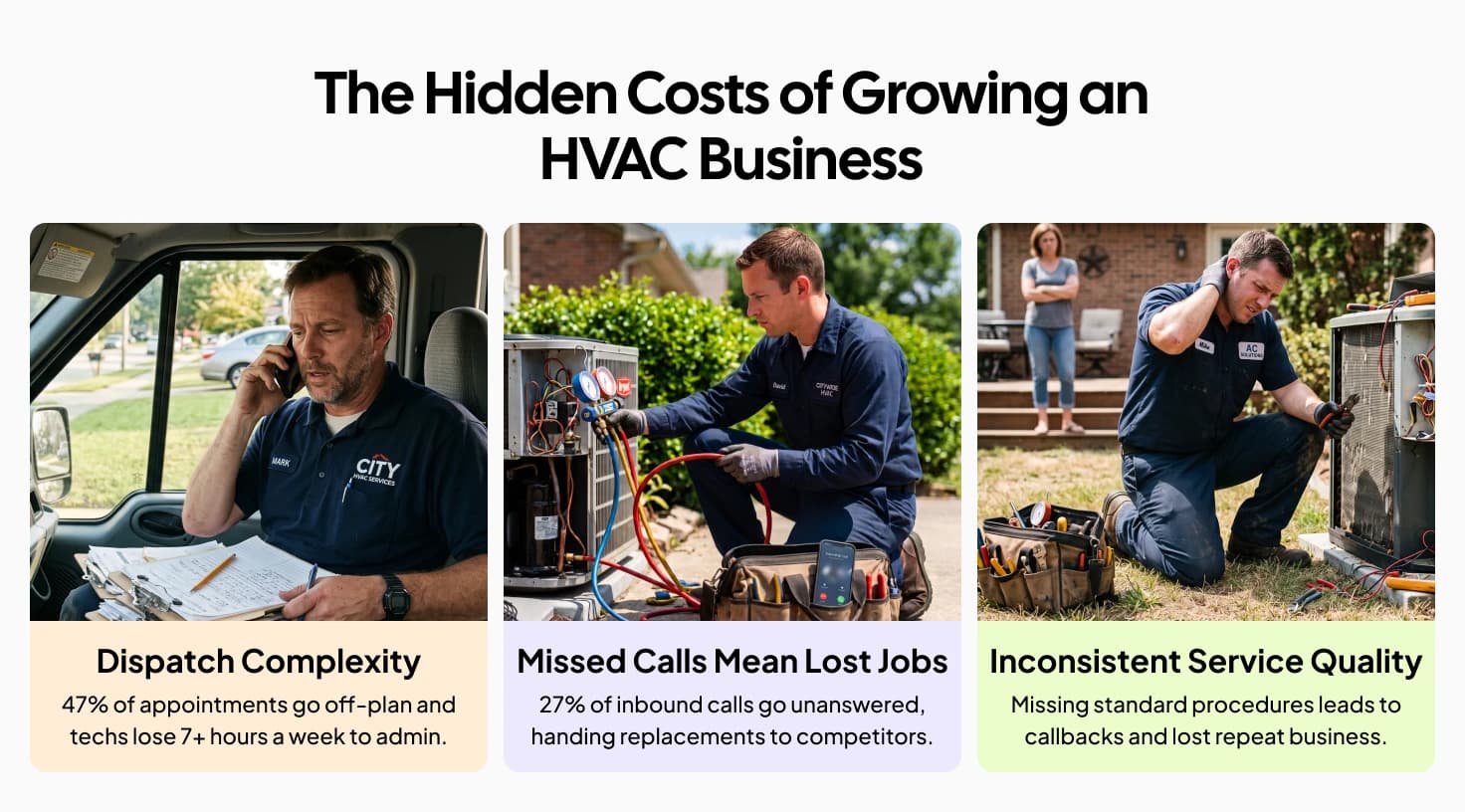
More Techs Mean More Dispatch Complexity: Managing an expanding fleet on spreadsheets is a recipe for chaos. It's inefficient and error-prone. In fact, a 2025 Salesforce Field Service study found that 47% of appointments don’t go as planned, and technicians waste over 7 hours a week just on admin tasks.
Inconsistent Installs and Service Calls Hurt Repeat Business: Operating without standard procedures inevitably tanks quality. Minor oversights like improper refrigerant charges lead to devastating system callbacks. These preventable errors destroy your profit margins and shred the client trust needed to turn a single service call into a recurring relationship.
Missed Calls Cost You High-Ticket System Replacements: In the HVAC industry, speed wins. Industry research shows that service businesses miss an average of 27% of their inbound calls. Every uncaptured ring during a peak heatwave is a high-value equipment replacement handed directly to your competition down the street.
8 Tips for Scaling Your HVAC Field Service Business
Growing a profitable HVAC business means you must step back from micromanaging daily field jobs and trust automated workflows instead. When you set clear, predictable rules for your office dispatchers and crews, you protect your service quality and your bottom line. These eight straightforward steps give you a reliable playbook to keep expansion simple.
1. Standardize Installation and Service Workflows
If you want consistent quality across a larger crew, you need repeatable checklists for every job type, whether it’s a basic diagnostic call or a full heat pump installation. Having crews use a digital checklist means they won’t forget critical steps like safety diagnostics or taking required pictures before clearing out. It's the easiest way to break into new territories without watching your service quality tank.
2. Centralize Scheduling and Dispatching
Bringing scheduling into one shared visual calendar lets your office manage multiple territories in real time. This single master view cuts out the guesswork, letting dispatchers send the closest qualified technician to emergency calls immediately. Stripping away unbillable travel time keeps your trucks running efficiently and ensures your crews spend their day booking actual service revenue instead of driving.
3. Never Let a Missed Call Cost You a System Replacement
Protect your inbound lead flow by deploying automated call capture systems that operate 24/7. When your dispatch lines are tied up during peak seasons, or when calls arrive after hours, an AI receptionist must instantly pick up the call to qualify prospects and book jobs. This immediate responsiveness keeps hot leads engaged before they can contact local competitors, helping you win more jobs and protect your marketing return on investment.
4. Equip Techs with Tiered Pricing for Bigger Tickets
Have your field technicians present clean, multi-option quotes right from their phones while standing in the customer's driveway. Giving homeowners a tiered “good-better-best” model provides transparent options that fit any budget, stripping away sales pressure while naturally driving up your average ticket size. It's the simplest way to help your crews bring in more profit on system replacements without feeling like pushy salespeople.
5. Offer Financing to Close High-Ticket Jobs on the Spot
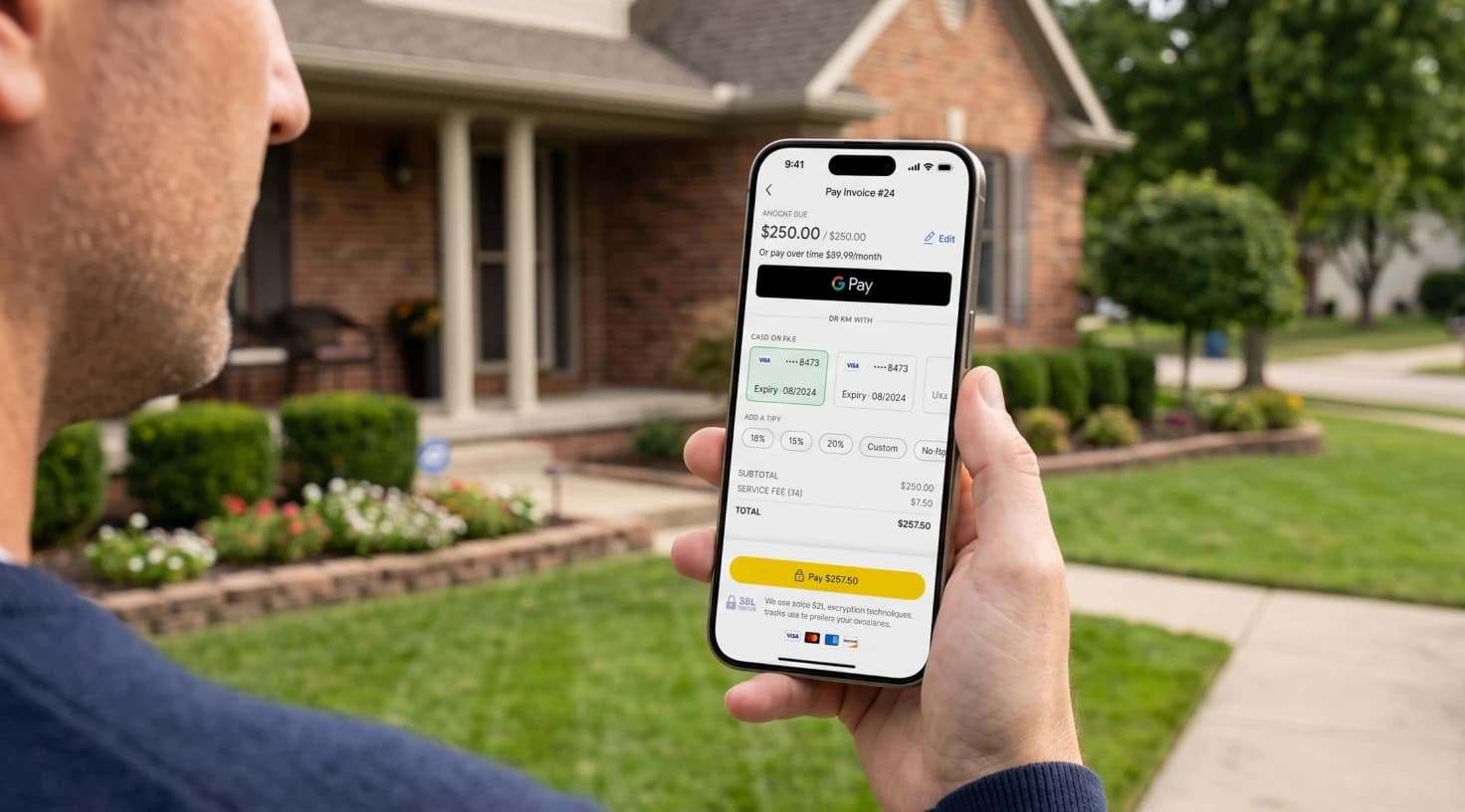
Sticker shock goes away when you build flexible consumer financing options right into your digital estimates. Giving homeowners the option to apply and get approved instantly while your technician is standing in the driveway means you can close system replacements on the spot. It stops clients from shopping around for cheaper bids and keeps big installation jobs from stalling out due to sudden cash constraints.
6. Automate Invoicing and Payment Collection
Cut out office delays by having your technicians send digital invoices and collect secure credit card payments right from the driveway the second a job wraps up. Every day an invoice sits unsent means a delay in your hard-earned cash. Collecting on-site keeps your cash flow moving, keeps your bookkeeping clean, and completely eliminates the pain of chasing down unpaid balances weeks down the road.
7. Track Technician Performance with Real Data
Stop evaluating your crew by gut feeling and watch the actual numbers instead. Track critical daily indicators like average job completion times, first-time fix rates, and system replacement conversions. This real-world clarity lets you objectively reward your top-performing technicians, spot exact training gaps, and keep service quality entirely predictable as you break into new branch territories.
According to the U.S. Bureau of Labor Statistics HVAC Occupational Outlook, demand for skilled trades professionals continues to rise, making objective, data-driven performance tracking essential to manage and retain top-tier talent.
8. Build Recurring Revenue With Maintenance Plans
Relying strictly on unpredictable emergency repairs makes scaling nearly impossible. Selling seasonal maintenance agreements stabilizes your cash flow and keeps your dispatch boards full during slow shoulder months. More importantly, service plans lock in long-term loyalty, making your shop the absolute first choice when a homeowner’s aging system eventually needs a high-ticket replacement. Predictable recurring revenue is the financial foundation that funds your expansion.
HVAC Growth Metrics to Track as You Scale
Managing an expanding field team means you have to stop relying on gut feelings or basic month-end bank balances. When your fleet grows, hidden travel waste and missed opportunities can quietly eat away at your revenue. To keep your cash flow protected, you need to watch real-world indicators. Here are the core metrics that high-performing HVAC companies track to protect their profit margins:
Growth Metric | Operational Focus & Calculation Method | Recommended Target Range |
Dispatch and Scheduling Efficiency | Ratio of active billable wrench-time to non-billable drive time per technician. | Under 25 minutes average travel time per job |
Average Invoice Value | Average dollar value invoiced per completed job; tracked on individual leaderboards to spot coaching needs. | $350 – $600 average ticket size per service call |
Lead Response Time and After-Hours Conversion | Time between receiving a digital inquiry or missed call and the first outbound booking attempt. | Under 5 minutes median response time (24/7 capture) |
Service Plan Renewal Rates | Percentage of maintenance agreement clients who actively renew their annual contracts. | 80% – 85%+ annual retention and renewal rate |
Setting these targets is critical if you want to keep installation quality identical across multiple branches. Sticking to baseline national specifications, like the standard ANSI/ACCA Quality Installation guidelines, means every system is commissioned correctly to protect your customer loyalty.
How Workiz Helps HVAC Businesses Scale Without the Chaos
To grow your HVAC shop smoothly, you have to replace disconnected calendar tools and spreadsheets with a single, connected operational framework. Workiz brings dispatching, field invoicing, and automated customer tracking into one dashboard, letting you absorb a high volume of calls without adding back-office chaos.
AI-Suggested Scheduling with Genius Scheduling: Genius Scheduling helps automate job assignment by matching new jobs to available technicians, reducing the manual back-and-forth of building daily routes by hand and helping keep your trucks running efficiently across every territory, so your trucks spend less time in traffic and more time earning branch revenue.
Never Miss a High-Ticket Lead With Genius Answering: A missed incoming ring is a guaranteed installation job given straight to a local competitor. Workiz uses a built-in, 24/7 AI receptionist via Genius Answering to catch your after-hours and overflow calls. It qualifies incoming prospects and books appointments directly onto your shared dispatch board, keeping hot replacement leads from dying in voicemail.
Close More System Replacements with Tiered Estimates and Financing: Equipping your field crews with the Workiz mobile app turns every truck into a high-performing retail asset. Right from the customer driveway, your technicians can build clean, multi-tier proposals, offer instant consumer financing through Wisetack, and collect secure card payments on the spot. This streamlined sales process helps you secure system replacements immediately before customers shop around for other bids.
Call Insights to Coach Dispatchers and Track Performance: Instead of spending hours listening to call recordings, use Call Insights to monitor your office staff automatically. The platform transcribes and reviews your team’s customer conversations, instantly flagging common home service objections, missed up-selling openings, and specific dispatcher training gaps.
Conclusion
Scaling an HVAC business isn't about some fancy master plan; it's about fixing the tiny leaks that turn into giant headaches once you pass the 5-tech mark. If you're still trying to run a multi-location fleet on whiteboards and group texts, you aren't scaling; you're just inviting chaos.
You don’t need another sales gimmick. You need an operating system that actually keeps up with your tech. When you move to a centralized platform, you stop chasing your tail and start actually running the business. You save time, you stop missing calls, and you keep your techs focused on the work that actually pays the bills.
If you're tired of the admin drain and ready to scale, book your Workiz demo. We'll have you up and running in less than two weeks, and you'll wonder why you waited this long.